
A few years ago, most workplace conversations around inclusion felt… rehearsed. Companies had policies, training slides, and carefully worded statements, but many employees still felt unseen. Especially neurodivergent professionals.
That’s changing now, slowly but noticeably.
More businesses are beginning to understand that neurodiversity isn’t some side conversation reserved for HR workshops once a year. It’s tied directly to creativity, problem-solving, communication, leadership, and the everyday experience of work itself. And honestly, people are tired of surface-level corporate language. They want real conversations from people who actually understand the subject from lived experience.
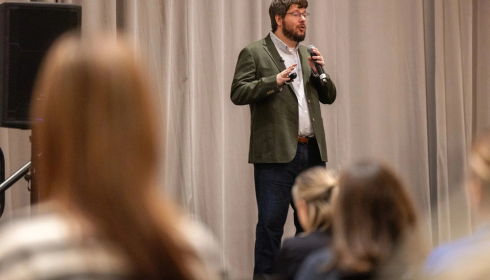
That’s one reason organizations increasingly bring in a Neurodiversity Keynote Speaker during leadership summits, employee wellbeing events, and internal culture programs. Not just to “tick a box,” but because authentic stories land differently than policy documents ever could.
And employees remember them.
The Workplace Was Never Designed for Everyone
Most office systems were built around a very narrow definition of productivity. Sit still. Communicate a certain way. Focus in open-plan offices. Handle noise. Maintain eye contact. Speak confidently in meetings. Multitask constantly.
For some people, that environment works perfectly fine.
For others, it’s exhausting.
Neurodivergent individuals — including people with ADHD, autism, dyslexia, dyspraxia, Tourette syndrome, and other cognitive differences — often spend years adapting themselves to workplace expectations that weren’t designed with them in mind. Sometimes they succeed outwardly while quietly burning out underneath.
What’s interesting is that many companies don’t even realize how many neurodivergent employees they already have. Some team members may not disclose it. Others may not even have a formal diagnosis. Yet their experiences shape how they collaborate, communicate, and perform every single day.
The best organizations are beginning to shift the question from:
“How do we make people fit the system?”
to:
“How do we build systems flexible enough for different minds?”
That’s a much healthier conversation.
Small Changes Can Have a Huge Impact
People often assume inclusion requires massive restructuring. In reality, some of the most effective workplace adjustments are surprisingly simple.
Clear written instructions.
Flexible communication styles.
Quiet workspaces.
Meeting agendas shared beforehand.
Optional camera use during virtual calls.
Permission to process information differently.
These aren’t expensive ideas. They’re thoughtful ones.
And when companies start implementing them, something unexpected tends to happen: everybody benefits, not only neurodivergent employees.
That’s the irony of accessibility. Good systems usually help more people than they were originally designed for.
A manager who learns to communicate more clearly because of neurodiversity training often becomes a better manager overall. Teams become less reactive. Meetings improve. Burnout decreases. People feel safer asking questions instead of pretending they understand everything immediately.
That shift matters more than companies sometimes realize.
Why Lived Experience Resonates More Than Corporate Training
Traditional workplace training has its place, sure. But employees can usually tell when something feels overly scripted or detached from reality.
A speaker sharing personal experiences — the awkward moments, misunderstandings, masking, burnout, strengths, and breakthroughs — creates a different level of connection. It stops feeling theoretical.
That’s why demand for a strong neurodiversity in the workplace speaker has grown across industries ranging from tech and finance to education and healthcare.
People don’t just want statistics anymore. They want context. Nuance. Honesty.
They want someone who can explain why a high-performing employee may struggle with sensory overload during meetings. Or why someone brilliant at pattern recognition might still find traditional interviews incredibly difficult.
Those conversations open doors that policies alone rarely can.
Innovation Often Comes From Different Thinkers
There’s another part of this conversation that businesses are finally paying attention to: innovation.
Some of the world’s best problem-solvers think differently. They notice patterns others miss. They question inefficient systems. They approach challenges from unusual angles. That cognitive diversity can become a major advantage when supported properly.
Of course, neurodiversity shouldn’t only be valued for productivity or profit. People deserve inclusion because they’re human beings, not because they increase quarterly revenue.
Still, it would be naive to ignore the business impact entirely.
Teams with varied thinking styles often produce stronger ideas. More creative solutions. Better long-term adaptability.
And in industries changing as quickly as ours are right now, adaptability matters a lot.
The Future of Work Will Probably Be More Flexible
If there’s one thing recent years have taught us, it’s that work doesn’t need to look exactly the same for everyone.
Some people thrive remotely. Others need structure and physical collaboration. Some focus better in silence. Others work brilliantly with movement or background stimulation.
The old “one correct way to work” model is fading, even if slowly.
That’s probably a good thing.
The companies that embrace flexibility without losing clarity are often the ones building healthier cultures overall. Not perfect cultures — those don’t exist — but workplaces where people spend less energy pretending and more energy contributing meaningfully.
And honestly, that benefits everyone involved.
Final Thoughts
Conversations around neurodiversity at work are becoming more mature now. Less performative. More practical. More human.
There’s still a long way to go, obviously. Many workplaces continue to misunderstand neurodivergence entirely, while others unintentionally create environments that quietly exclude talented people.
But progress rarely happens all at once.
Sometimes it starts with a single conversation, a thoughtful leader, or a speaker willing to tell the truth about how different minds experience the same workplace differently.
And sometimes, that’s enough to change how an entire organization thinks moving forward.