Posture is one of those things almost everyone knows they should pay attention to – and almost no one consistently does. The reminders are familiar: sit up straight, don’t hunch over your phone, use a supportive chair. Most people hear this advice, adjust momentarily, and then drift back to the position that feels most comfortable in the moment.
The problem is that comfort and spinal health are not the same thing. The postures that feel easiest in the short term – forward head tilt, rounded shoulders, collapsed lumbar curve while sitting – are often the ones that place the greatest mechanical stress on spinal structures over time. And unlike a muscle strain that signals its damage immediately, postural spinal damage accumulates quietly over months and years before producing symptoms that demand attention.
Understanding what your daily posture is actually doing to your spine – in structural, mechanical terms – changes how you relate to these habits in a way that abstract reminders never quite achieve.
How Posture Loads the Spine: The Mechanical Reality
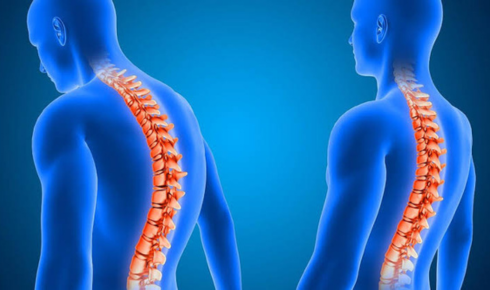
The spine is designed to manage compressive force efficiently when its natural curves are maintained. The cervical lordosis (gentle forward curve in the neck), the thoracic kyphosis (gentle rearward curve in the upper back), and the lumbar lordosis (forward curve in the lower back) work together as a system that distributes load evenly across vertebral bodies, discs, and joints.
When posture departs from this balanced alignment, the distribution of force changes. A forward head posture shifts a disproportionate share of the head’s weight onto the lower cervical discs and the posterior cervical musculature. A flattened lumbar curve while sitting concentrates compressive force on the front edges of the lumbar discs, over time contributing to the kind of disc degeneration that leads to bulging and herniation.
Each degree of deviation from neutral alignment may seem trivial in isolation. Accumulated over six to ten hours of daily screen time, multiplied across years, the total loading becomes very significant indeed.
The Specific Postures That Cause the Most Damage
Several postural patterns are particularly damaging because of their prevalence in modern life and the specific spinal structures they stress.
- Forward head posture: Each centimetre the head moves forward of the shoulders adds compressive load to the lower cervical spine, accelerating disc degeneration and facet joint wear at C5-C6 and C6-C7
- Rounded shoulders: Protracts and elevates the shoulder blades, elongating and weakening the mid-back muscles while tightening the chest, pulling the thoracic spine into excessive kyphosis
- Sitting with a tucked pelvis: Flattens the lumbar curve, shifting disc loading to the anterior vertebral margins and stressing the posterior lumbar ligaments over time
- Asymmetric sitting: Habitually crossing the legs or leaning to one side creates uneven loading across the lumbar disc and sacroiliac joint, promoting compensatory patterns
- Sustained end-range postures: Any position held at the extreme of its range for extended periods places progressive creep strain on the passive spinal structures
Building a Posture-Aware Daily Routine
The goal is not perfect posture held rigidly throughout the day – that is both unrealistic and unnecessary. The goal is postural variety combined with a neutral resting position as the default.
Workstation setup makes an enormous practical difference. A monitor positioned so that the top of the screen is at or slightly below eye level eliminates the most common source of sustained cervical flexion. A chair adjusted so that the hips are at approximately ninety degrees with both feet flat on the floor, combined with a lumbar support that preserves the natural lumbar curve, dramatically reduces the compressive forces on the lumbar discs during seated work.
Movement frequency matters as much as position. The cervical and lumbar discs rely on movement for their nutrition, and prolonged static loading – regardless of how good the posture is – reduces the fluid exchange they depend on. Standing up, walking briefly, or performing a few minutes of gentle movement every forty-five to sixty minutes keeps the discs hydrated and the supporting muscles active.
Sleep posture is often overlooked as a contributor to spinal loading. Stomach sleeping maintains the cervical spine in sustained rotation for hours, creating significant asymmetric loading of the cervical facet joints. Side or back sleeping with a properly contoured pillow that supports the natural cervical curve is consistently better for cervical disc and joint health.
When Posture Alone Is Not Enough
Postural correction through habit and ergonomic adjustment addresses the ongoing loading problem. But it does not reverse the structural changes that have already developed from years of poor posture – disc dehydration, facet joint changes, muscle imbalances that have become deeply ingrained.
Professional non-surgical spinal care works alongside postural correction to address these existing changes. Non-Surgical Spinal Decompression Therapy reduces the disc pressure that accumulated postural loading has created, supporting disc recovery and nerve decompression. Targeted rehabilitation rebuilds the deep stabilising muscles – particularly the deep cervical flexors and the lumbar multifidus – that are consistently weakened by poor postural habits and that need active retraining to function effectively again.
At ANSSI Wellness, Back Pain Treatment includes a postural and ergonomic assessment as part of every care plan. Understanding each patient’s specific postural patterns allows the treatment team to correct both the symptoms and the daily habits that are sustaining them.
Strengthening the Muscles That Make Good Posture Possible
One reason postural habits are hard to maintain through willpower alone is that good posture requires muscular effort – and if the relevant muscles are weak, sustaining that effort becomes genuinely fatiguing. The deep cervical flexors that hold the head in neutral, the lower and middle trapezius that retract the shoulder blades, and the lumbar multifidus and transverse abdominis that support the lumbar curve all need to be strong enough to perform their postural role without conscious effort.
A structured rehabilitation programme that progressively loads these muscles – moving from low-demand activation exercises to functional strength – is what makes improved posture sustainable rather than a constant struggle. This is one of the core components of effective spinal care, and it is also one of the components most frequently omitted from generic back pain advice.
Conclusion
Posture is not a trivial concern or a matter of appearances. It is the primary determinant of how mechanical force is distributed across your spinal structures throughout every day of your life. Improving it – through ergonomic adjustment, movement habits, and targeted muscular rehabilitation – is one of the most impactful investments you can make in long-term spinal health. And for those where postural damage has already accumulated, non-surgical professional care provides the structural correction that habit change alone cannot achieve.