Neck pain can be caused by sleeping in the wrong position or sitting at a desk for too long, but that’s not always the case. In several cases, the trouble begins with the jaw. Poor posture can put stress on the temporomandibular joint (TMJ), which can cause tight muscles that radiate pain into the neck, shoulders and even upper back. That’s why a TMJ massage can be a great, non-invasive way to relieve jaw tension and the neck pain that often appears with it.
TMJ massage targets the muscles that connect the jaw, head and neck. Releasing tension in these connected areas can help improve jaw movement, reduce pain, and enhance overall comfort.
How Poor Posture Affects The Jaw And Neck
The temporomandibular joint connects your lower jaw to your skull. It works with dozens of muscles that help you chew, speak, yawn and keep your head stable.
When your posture is correct, these muscles share the effort efficiently. But poor posture, especially forward head posture, changes the way these muscles work.
Forward head posture usually results from:
- Staring at a phone for long periods
- Bad computer ergonomics
- Sitting in a slouching posture
- Long-distance driving
- Hours spent on a laptop without proper support
As your head moves forward, the muscles in your neck and jaw have to work harder to support its weight. As time passes, these muscles become tight, tired and painful. This constant strain can lead to TMJ dysfunction and make simple acts such as talking, chewing and yawning uncomfortable.
Signs That Your Neck Pain Might Be TMJ-Related
TMJ dysfunction doesn’t always start with jaw pain. Most people notice symptoms in their neck or shoulders first before realizing their jaw is involved.
Common signs:
- Continuous stiffness of the neck
- Pain in the jaw joint area
- Clicking or popping while opening the mouth
- Inability to open the mouth completely
- Tension headaches
- Facial muscle soreness
- Ear pain without infections
- Shoulder stiffness
- Jaw grinding or teeth clenching
The jaw muscles work together with the neck muscles, so tension in one part often affects the other.
Benefits of TMJ Massage
A TMJ massage works on the muscles that move the jaw and support the head. The treatment addresses the whole network of muscles involved in the tension, not just the painful spot.
A session may involve working on the:
- Masseter muscles of the jaw
- Side of the head (temporalis muscles)
- Neck muscles (sternocleidomastoid muscles)
- Upper Traps
- Base of the skull (suboccipital muscles)
- Shoulder and upper back muscles
TMJ massage can help release tight muscles and reduce trigger points. Depending on the individual, even one session may help:
- Loosen the jaw
- Enhance jaw movement
- Reduce neck stiffness
- Relieve muscle-related headaches
- Enhance chewing and speaking comfort
- Enhance more balanced muscle function
Each treatment is tailored to the individual’s symptoms, muscle tension and movement patterns.
What To Expect When You Get a TMJ Massage
All clients start with an assessment of muscle tension, posture and jaw movement. This allows the therapist to find what muscles are contributing most to the pain.
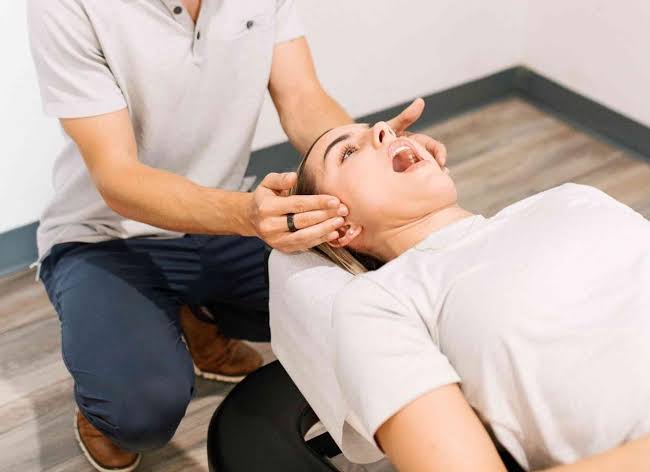
Treatment is usually gentle, and it involves specific work on the jaw, neck, shoulders and upper back. Controlled, slow techniques help release muscle tightness without overstressing the TMJ.
Depending on the training of the therapist and the comfort level of the client, gentle intraoral massage may also be part of treatment. This technique is used to treat muscles inside the mouth that cannot be reached from the outside and may provide additional relief for some types of TMJ dysfunction.
If you are searching for ‘TMJ near me’ on Google to find a TMJ massage provider, finding one with experience in therapeutic jaw and neck massage can make a real difference. Working with massage therapists who understand the relationship between posture, muscle function and TMJ can help get to the root of the persistent muscle tension, rather than just treat the symptoms.
Conclusion
Poor posture can place constant stress on the muscles that support the jaw and neck, which can lead to pain that often extends beyond the TMJ alone. A focused TMJ massage in Jersey City targets these related muscles to help alleviate tension, enhance jaw mobility, and lessen neck pain. The goal of TMJ massage is to restore healthier muscle function, helping improve movement, reduce discomfort, and support long-term relief.