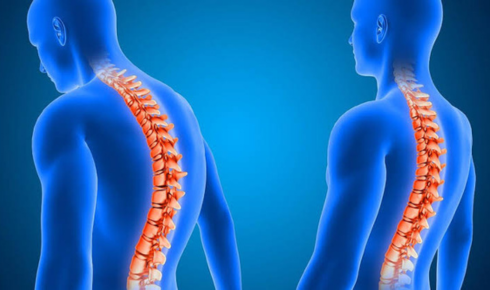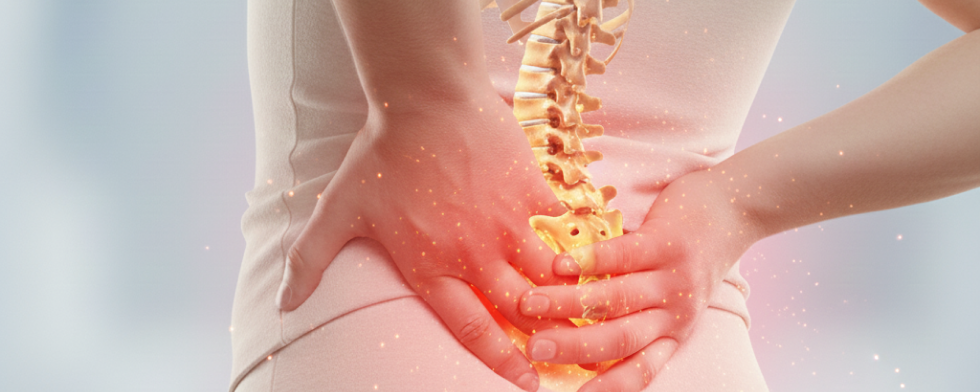
The relationship between body weight and back pain is both obvious and misunderstood. The obvious part: carrying excess weight places more load on the spine, accelerates disc degeneration, and increases the risk of structural injury. The misunderstood part: this relationship is not purely mechanical. Excess adipose tissue is metabolically active, generating inflammatory molecules that directly damage spinal structures, sensitise nerve tissue, and impair the healing environment that recovery depends on.
Understanding both dimensions — the mechanical and the metabolic — changes how the problem should be approached and what treatment actually needs to address.
The Mechanical Dimension: Load, Posture, and Joint Stress
Every kilogram of body weight carried forward of the spine’s centre of mass generates a load on the lumbar vertebrae that is amplified by the mechanical lever arm of the torso. For individuals carrying significant abdominal weight, this forward displacement of the centre of mass is substantial. Research has demonstrated that each additional kilogram of body weight increases lumbar disc compressive force during daily activities by approximately three to four kilograms at certain spinal levels — a multiplier effect that accumulates relentlessly across years of daily activity.
The postural consequences of central adiposity compound this mechanical loading. As the abdomen grows forward, the lumbar spine hyperextends to counterbalance the anterior weight, increasing compressive loading on the facet joints and posterior disc structures. The pelvis tilts anteriorly, tightening the hip flexors and weakening the gluteal muscles that contribute to lumbar stability. The result is a postural pattern that places every spinal structure under greater chronic stress.
At the knees and hips, excess weight accelerates arthritic change and reduces the shock absorption these joints normally provide before forces reach the spine. When knee or hip pain limits walking and exercise capacity, the resulting deconditioning further weakens the core musculature that protects the lumbar spine — a secondary cycle that can be more damaging than the original mechanical overload.
The Metabolic Dimension: Adipose Tissue as an Inflammatory Organ
Adipose tissue — particularly visceral fat accumulated around the abdominal organs — is not simply stored energy. It is an endocrine and immune-active tissue that secretes a range of biologically potent molecules collectively called adipokines. Many of these molecules promote systemic inflammation, reduce insulin sensitivity, and activate inflammatory pathways that reach spinal tissues through the bloodstream.
The practical consequences for the spine include accelerated disc degeneration driven by inflammatory cytokine exposure, reduced disc cell viability and metabolic efficiency, increased nerve root sensitivity due to systemic inflammatory tone, and impaired healing response following injury — meaning that the same disc injury that might resolve in 6-8 weeks in a lean individual may persist for months in a person carrying significant excess weight.
What Integrated Treatment Looks Like
The effective management of back pain in the context of excess body weight requires simultaneous attention to spinal structure and systemic health. Treating only the structural spine problem while ignoring the metabolic inflammation driving it produces partial and temporary results. Pursuing weight loss without addressing the acute spinal pain that limits activity creates a situation where the person cannot exercise adequately to achieve meaningful weight reduction.
The most effective approach combines non-surgical spinal care — targeting the specific structural problems generating pain — with nutritional guidance and graded physical activity that is achievable within the person’s current pain tolerance. The team at ANSSI Wellness understands that for patients managing both back pain and excess weight, the clinical priorities are reducing pain enough to enable activity, and designing a movement programme that is safe for the specific spinal condition while supporting the broader health goals.
Low-Impact Exercise: The Bridge Between Pain Management and Weight Loss
For individuals whose back pain limits conventional exercise, low-impact options that maintain cardiovascular demand while protecting the spine include:
- Swimming and aquatic exercise: water buoyancy reduces spinal loading by approximately 90%, allowing vigorous exercise with minimal disc compression
- Cycling (stationary or road): provides cardiovascular stimulus with minimal axial spinal loading when properly set up
- Walking with appropriate footwear: even short sessions accumulate cardiovascular benefit and drive disc nutrient exchange
- Recumbent exercise: recumbent bikes and ellipticals allow significant energy expenditure in a supported, low-spine-load position
Conclusion
Excess body weight and back pain form a bidirectional relationship in which each factor worsens the other. Breaking this cycle requires a treatment approach that addresses both simultaneously, beginning with non-surgical pain management that creates the physical capacity for activity, and combining it with nutritional and lifestyle support that gradually shifts the metabolic environment in which the spine is operating. This is not a simple problem, but it is a solvable one when approached with the right combination of professional expertise and patient commitment.